Download Ebook Zero Zero Zero, by Saviano Roberto
Gather guide Zero Zero Zero, By Saviano Roberto begin with currently. But the extra means is by gathering the soft documents of the book Zero Zero Zero, By Saviano Roberto Taking the soft data can be saved or saved in computer or in your laptop computer. So, it can be more than a book Zero Zero Zero, By Saviano Roberto that you have. The most convenient way to expose is that you could also conserve the soft file of Zero Zero Zero, By Saviano Roberto in your suitable and readily available gizmo. This problem will certainly mean you frequently check out Zero Zero Zero, By Saviano Roberto in the spare times more than chatting or gossiping. It will not make you have bad habit, yet it will certainly lead you to have much better practice to read book Zero Zero Zero, By Saviano Roberto.
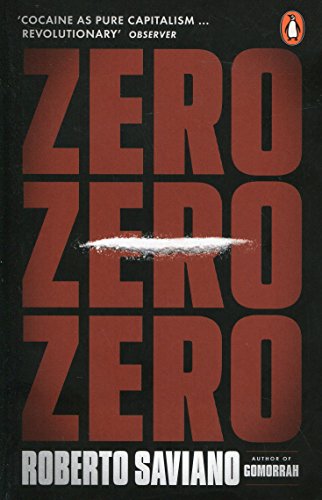
Zero Zero Zero, by Saviano Roberto

Download Ebook Zero Zero Zero, by Saviano Roberto
New upgraded! The Zero Zero Zero, By Saviano Roberto from the most effective author as well as author is now readily available below. This is guide Zero Zero Zero, By Saviano Roberto that will make your day reading comes to be finished. When you are seeking the published book Zero Zero Zero, By Saviano Roberto of this title in the book shop, you might not locate it. The problems can be the restricted editions Zero Zero Zero, By Saviano Roberto that are given in guide shop.
This is why we advise you to consistently see this web page when you need such book Zero Zero Zero, By Saviano Roberto, every book. By online, you could not getting guide establishment in your city. By this on-line collection, you can find guide that you really want to read after for long time. This Zero Zero Zero, By Saviano Roberto, as one of the recommended readings, oftens be in soft documents, as all book collections here. So, you might additionally not wait for few days later to receive and check out the book Zero Zero Zero, By Saviano Roberto.
The soft data indicates that you should go to the web link for downloading and install and after that conserve Zero Zero Zero, By Saviano Roberto You have actually possessed guide to check out, you have presented this Zero Zero Zero, By Saviano Roberto It is easy as going to the book establishments, is it? After getting this short description, ideally you can download one as well as start to read Zero Zero Zero, By Saviano Roberto This book is extremely easy to read each time you have the free time.
It's no any faults when others with their phone on their hand, and you're as well. The distinction might last on the product to open up Zero Zero Zero, By Saviano Roberto When others open up the phone for chatting and also speaking all points, you can occasionally open and also check out the soft file of the Zero Zero Zero, By Saviano Roberto Of course, it's unless your phone is available. You can likewise make or wait in your laptop computer or computer that eases you to review Zero Zero Zero, By Saviano Roberto.
An electrifying, internationally bestselling investigation of the global cocaine trade, from the author of the #1 international bestseller Gomorrah
�
“Zero zero zero” flour is the finest, whitest available. It is also the nickname among narcotraffickers for the purest cocaine on the market. And it is the title of Roberto Saviano’s unforgettable exploration of the inner workings of the global cocaine trade—its rules and armies, and the true depth of its reach into the world economy.
�
Saviano’s Gomorrah, his explosive account of the Neapolitan mob, the Camorra, was a worldwide sensation. It struck such a nerve with the Camorra that Saviano has lived with twenty-four-hour police protection for more than eight years. During this time he has come to know law enforcement agencies and officials around the world. With their cooperation, Savaiano has broadened his perspective to take in the entire global “corporate” entity that is the drug trade and the complex money-laundering operations that allow it to function, often with the help of the world’s biggest banks.
�
The result is a harrowing and groundbreaking synthesis of literary narrative and geopolitical analysis exploring one of the most powerful dark forces in our economy. Saviano tracks the shift in the cocaine trade’s axis of power, from Colombia to Mexico, and relates how the Latin American cartels and gangs have forged alliances with crime syndicates across the globe. He charts the increasing sophistication of these criminal entities as they diversify into other products and markets. He also reveals the astonishing increase in the severity of violence as they have fought to protect and extend their power.
�
Saviano is a writer and journalist of rare courage and a thinker of impressive intellectual depth, able to see connections between far-flung phenomena and bind them into a single epic story. Most drug-war narratives feel safely removed from our own lives; Saviano offers no such comfort. Both heart-racing and eye-opening, ZeroZeroZero is an investigative story like none other.
�
Praise for ZerZeroZero:
�
“[Saviano] has developed a literary style that switches from vivid descriptions of human depravity to a philosophical consideration of the meaning of violence in the modern world. . . . Most important of all is the hope Saviano gives to countless victims of criminal violence by standing up to its perpetrators.” —Financial Times
- Published on: 2016-08-25
- Original language: Italian
- Number of items: 1
- Dimensions: 7.80" h x .75" w x 5.08" l, .82 pounds
- Binding: Paperback
- 418 pages
Review
The Economist:�
Taken as a whole, [ZeroZeroZero] is an angry rebuke to all those—traffickers and politicians alike—who perpetuate the violence….By reminding readers of the senseless suffering wrought by the cocaine trade, this book makes a powerful case for a new approach.”
�
Financial Times:�
In articulating [his]�cri de coeur, [Saviano] has developed a literary style that switches from vivid descriptions of human depravity to a philosophical consideration of the meaning of violence in the modern world. Indeed, when he revisits his work on Naples — the city where he was brought up and from which he is now excluded — his reflections soar into the realm of the poetic. But for me, most important of all is the hope Saviano gives to countless victims of criminal violence by standing up to its perpetrators, especially those from his home country.
Booklist�(starred review):�
“With keen observation and deep probing, Saviano is an anthropologist and philosopher as much as a journalist. This is an epic account of how the modern cocaine trafficking business came to be and how widespread, how impenetrable, and how intertwined with international commerce and politics—and our everyday lives—it is.”
Kirkus:
“This revealing new book, with a strong focus on Mexico's cartels, surges with fast-moving prose detailing the lives of drug lords and pushers, the inner workings of their violent world, and how their lucrative business (between $25 billion and $50 billion annually) affects all our lives…. Saviano describes the complexities of money laundering, how world banks help make it possible, and the many ways in which drugs are smuggled: in paintings, handcrafted doors, frozen fish, and more. Throughout, the author provides vivid stories of the lives of well-known drug bosses and their minions. Saviano says he can no longer look at a beach or a map without seeing cocaine, and many will share that view after reading this dark, relentless, hyperreal report.”
From the Hardcover edition.
About the Author
Roberto Saviano was born in Naples in 1979. He is the author of Gomorrah: A Personal Journey into the Violent International Empire of Naples’s Organized Crime System and has lived under police protection since its publication in 2006. His writing has appeared in the Washington Post, the New York Times, Der Spiegel, Die Zeit, and the Times (London).
Excerpt. � Reprinted by permission. All rights reserved.
The guy sitting next to you on the train uses cocaine, he took it to get himself going this morning; or the driver of the bus you’re taking home, he wants to put in some overtime without feeling the cramps in his neck. The people closest to you use coke. If it’s not your mother or father, if it’s not your brother, then it’s your son. And if your son doesn’t use it, your boss does. Or your boss’s secretary, but only on Saturdays, just for fun. And if your boss doesn’t, his wife does, to let herself go. And if not his wife, then his lover—he gives her cocaine instead of earrings, in place of diamonds. And if they don’t, the truck driver delivering tons of coffee to caf�s around town does; he wouldn’t be able to hack those long hours on the road without it. And if he doesn’t, the nurse who’s changing your grandfather’s catheter does. Coke makes everything seem so much easier, even the night shift. And if she doesn’t, the painter redoing your girlfriend’s room does; he was just curious at first but wound up deep in debt. The people who use cocaine are right here, right next to you. The police officer who’s about to pull you over has been snorting for years, and everyone knows it, and they write anonymous letters to his chief hoping he’ll be suspended before he screws up big time. Or the surgeon who’s just waking up and will soon operate on your aunt. Cocaine helps him cut open six people a day. Or your divorce lawyer. Or the judge presiding over your lawsuit; he doesn’t consider it a vice, though, just a little boost, a way to get more out of life. The cashier who hands you the lottery ticket you hope is going to change your life. The carpenter who’s installing the cabinets that cost you a month’s salary. Or the workman who came to put together the IKEA closet you couldn’t figure out how to assemble on your own. If not him, then the manager of your condo building who is just about to buzz you. Or your electrician, the one who’s in your bedroom right now, moving the outlets. The singer you are listening to to unwind, the parish priest you’re going to talk to about finally getting confirmed because your grandson’s getting baptized, and he’s amazed you’ve put it off for so long. The waiters who will work the wedding you’re going to next Saturday; they wouldn’t be able to last on their feet all that time if they didn’t. If not them, then the town councillor who just approved the new pedestrian zones, and who gets his coke free in exchange for favors. The parking lot attendant who’s happy now only when he’s high. The architect who renovated your vacation home, the mailman who just delivered your new ATM card. If not them, then the woman at the call center who asks “How may I help you?” in that shrill, happy voice, the same for every caller, thanks to the white powder. If not her, your professor’s research assistant—coke makes him nervous. Or the physiotherapist who’s trying to get your knee working right. Coke makes him more sociable. The forward who just scored, spoiling the bet you were winning right up until the final minutes of the game. The prostitute you go to on your way home, when you just can’t take it anymore and need to vent. She does it so she won’t have to see whoever is on top or under or behind her anymore. The gigolo you treated yourself to for your fiftieth birthday. You did it together. Coke makes him feel really macho. The sparring partner you train with in the ring, to lose weight. And if he doesn’t, your daughter’s riding instructor does, and so does your wife’s psychologist. Your husband’s best friend uses it, the one who’s been hitting on you for years but whom you’ve never liked. And if he doesn’t, then your school principal does. Along with the janitor. And the real estate agent, who’s late, just when you finally managed to find time to see the apartment. The security guard uses it, the one who still combs his hair over his bald spot, even though guys all shave their heads these days. And if he doesn’t, the notary you hope you never have to go back to, he does it to avoid thinking about the alimony he has to pay his ex-wives. And if he doesn’t, the taxi driver does; he curses the traffic but then goes all happy again. If not him, the engineer you have to invite over for dinner because he might help you get a leg up in your career. The policeman who’s giving you a ticket, sweating profusely even though it’s winter. The squeegee man with hollow eyes, who borrows money to buy it, or that kid stuffing flyers under windshield wipers, five at a time. The politician who promised you a commercial license, the one you and your family voted into office, and who is always nervous. The professor who failed you on your exam. Or the oncologist you’re going to see; everybody says he’s the best, so you’re hoping he can save you. He feels omnipotent when he sniffs cocaine. Or the gynecologist who nearly forgets to throw away his cigarette before going in to examine your wife, who has just gone into labor. Your brother-in-law, who’s never in a good mood, or your daughter’s boyfriend, who always is. If not them, then the fishmonger, who proudly displays a swordfish, or the gas station attendant who spills gas on your car. He sniffs to feel young again but can’t even put the pump away correctly anymore. Or the family doctor you’ve known for years and who lets you cut the line because you always know just the right thing to give him at Christmas. The doorman of your building uses it, and if he doesn’t, then your kids’ tutor does, your nephew’s piano teacher, the costume designer for the play you’re going to see tonight, the vet who takes care of your cat. The mayor who invited you over for dinner recently. The contractor who built your house, the author whose book you’ve been reading before falling asleep, the anchorwoman on the evening news. But if, after you think about it, you’re still convinced none of these people could possibly snort cocaine, you’re either blind or you’re lying. Or the one who uses it is you.
1.
THE LESSON
“They were all sitting around a table, right here in New York, not far from here.”
“Where?” I asked instinctively.
He gave me a look that said he couldn’t believe I was stupid enough to ask a question like that. What I was about to hear was an exchange of favors. The police had arrested a young man in Europe a few years back. A Mexican with an American passport. He was sent to New York, where they let him stew in the swamp of the underworld instead of in jail. Every now and then he’d spill some news to keep from being arrested. Not an informer exactly, but pretty close, something that didn’t make him feel like a rat, but not one of those silent as stone types either. The police would ask him generic questions, nothing specific enough to expose him in front of his gang. They needed him to say which way the wind was blowing, what the mood was, rumors of meetings or wars. No proof or evidence, just rumors. They’d collect the evidence later on. But now that wasn’t enough. The young man had recorded a speech on his iPhone at a meeting he’d gone to. A speech that made the police uneasy. Some of them, whom I’d known for years, wanted me to write about it somewhere, to make noise, to see what sorts of reactions it got in order to find out if the story I was about to hear really went the way the young man said it had, or if it had been staged, a little theater piece. They wanted me to shake things up in the world where those words had been uttered, where they’d been heard.
The police officer waited for me in Battery Park, on a little jetty. No hat or dark glasses, no ridiculous disguise. He showed up in a brightly colored T-shirt and flip-flops, with a smile that said he couldn’t wait to spill his secret. His Italian was full of dialect, but I could understand him. He wasn’t looking for complicity of any sort; he had orders to tell me about the speech and didn’t waste time. I remember the story perfectly; it has stayed inside me. The things we remember aren’t stored merely in our heads; I’m convinced that other parts of our bodies remember too. The liver, testicles, fingernails, ribs. When you hear such words, they get lodged there. Each body part sends what it remembers to the brain. More and more I realize that I remember with my stomach, which stores up the beautiful as well as the horrendous. I know that certain memories are there, because my stomach moves. My diaphragm, that membrane rooted at the very core of my body, creates waves. The diaphragm makes us pant and shudder, but it also makes us piss, defecate, and vomit. That’s where the pushing during childbirth starts. Where everything starts. And I’m sure there are places that collect much worse, that store up the waste. I don’t know exactly where that place is inside of me, but I know it’s full. My place of memories, of waste, is saturated. That might seem like a good thing, but it isn’t. Because if the waste doesn’t have anywhere to go it starts worming its way into places it shouldn’t. It thrusts itself into places that collect different sorts of memories. That policeman’s story filled up forever the part of me that remembers the worst things. Those things that resurface just when you start thinking everything’s going better, when you start imagining you’ll finally be able to go home, when you tell yourself it really was worth it after all. It’s in moments like that when the dark memories resurface from somewhere, like an exhalation, like trash in a dump, buried and covered over by plastic, that somehow finds its way to the surface and poisons everything.
The police officer told me that the young man, his informer, had heard the only lesson worth learning—that’s what he called it—and had recorded it on the sly. Not to betray anyone, but to be able to listen to it again. A lesson on how to be in the world. And he let the officer hear the whole thing; they listened together, sharing the young man’s earbuds.
“Now you have to write about it. Let’s see if somebody gets pissed off�.�.�. which would mean that the young man’s telling the truth. If you write about it and nobody does anything, then either it’s just a load of crap from some B-grade actor, and our Chicano friend is making fools of us�.�.�. or nobody believes the bullshit you write.” He laughed.
I nodded without promising anything; I was just trying to understand the situation. Supposedly it was an old Italian boss talking to a group of Latinos, Italians, Italian Americans, Albanians, and former Kaibiles, the notorious Guatemalan elite soldiers. At least, that’s what the young man said. No facts, statistics, or details. Not something you learn against your will; you just enter the room one way and you come out changed. You’re still wearing the same clothes, have the same haircut, your beard is still the same length. No signs of being initiated, no cuts over your eyebrows, no broken nose, and you haven’t been brainwashed with sermons either. You go in, and when you come out, at first glance you look exactly the same as when you were pushed through the door. But only on the outside. Inside you’re completely different. They didn’t reveal the ultimate truth to you, they merely put a few things in their proper place. Things you hadn’t known how to use before, that you’d never had the courage to take in.
The police officer read me the transcription he’d made. They’d met in a room not far from where we were, seated in no particular order, randomly, not in a horseshoe like they do at ritual initiations. Seated like they do in a club in some small town in southern Italy, or on Arthur Avenue in New York City, to watch the soccer game on TV. But there was no soccer game on TV in that room, and this was no gathering of friends. They were all members of criminal organizations, of all different ranks. The old Italian gets up. They knew he was a man of honor, that he’d come to the United States after living in Canada for a long time. He begins talking without even introducing himself; he doesn’t need to. He speaks a bastard Italian, some dialect thrown in, mixed with English and Spanish. I wanted to know his name, so I asked the police officer, trying to sound casual, as if it were a passing curiosity. He didn’t bother answering me. There were only the boss’s words.
Them folks who think they can get by with justice, with laws that are equal for everybody, with hard work, dignity, clean streets, with women same as men, it’s only a world of fags who think it’s okay to make fools of themselves. And everyone around them. All that crap about a better world, leave it to them idiots. To the rich idiots who can afford such luxuries. The luxury of believing in a happy world, a just world. Rich people with guilty consciences, or with something to hide. Whoever rules just does it, and that’s that. Sure, he can say he rules for the good, for justice and liberty and all. But that’s just sissy stuff; leave all that to the rich fools. Who rules, rules. Period.
I tried asking how he was dressed, how old he was. Cop questions, things a reporter or a nosy obsessive would ask, believing that the typology of a boss who’d give this sort of speech can be had in the details. The police officer ignored me and kept on talking. I listened, sifting his words like sand in hopes of finding the nugget, the name. I listened to his words but was searching for something else. I was searching for clues.
“He wanted to explain the rules to them, capish?” the police officer said. “He wanted them to really get into it. I’m sure he’s not lying. This isn’t some lazy Mexican wank, I’m telling you. I swear on my life, even if no one believes me.”
The police officer buried his nose in his notebook and started reading again.
The rules of the organization are the rules of life. Government laws are the rules of one side that wants to fuck the other side. And we ain’t gonna let ourselves get fucked by nobody. There’s people who make money without taking any risks, and they’re always gonna be afraid of those who make money by risking everything. If you risk it all, you have it all, capish? But if you think you gotta save yourself, or that you can do it without jail time, without fleeing, without going into hiding, then let me make it clear right from the start: you are not a man. And if you’re not a man, you can leave this room right now, and don’t even hope to ever become one, ’cause you will never ever be a man of honor.
The police officer looked at me. His eyes were two narrow slits, as if he were trying to see words he remembered all too well. He had read and listened to that testimony dozens of times.
Crees en el amor? Love ends. Crees en tu coraz�n? Your heart stops. No? No love and no heart? So, do you believe in co�o, in pussy? Well, even pussies dry up after a while. You believe in your wife? Soon as your money runs out, she’ll tell you you’re neglecting her. You believe in your children? As soon as you stop giving them money they’ll say you don’t love them. You believe in your mama? If you don’t nurse her, she’ll say you’re an ungrateful child. Listen to what I’m tellin’ you. You need to live, vivir. You got to live for yourselves. It’s for yourselves that you need to know how to be respected, and how to show respect. La famiglia. Respect the people who are useful to you and despise the ones who aren’t. The people who can give you something get your respect, and the ones who are useless lose it. Somebody who wants something from you, doesn’t he respect you? Somebody who’s afraid of you? So what happens when you got nothing to give? When you got nothing left? When you’re no longer useful? Then you’re basura, rubbish. If you have nothing to give, then you’re nothing, nada, nulla.
“So,” the police officer said, “I understood right then and there that the boss, this Italiano, was somebody who counts, who knows what life’s about. Really knows. That Mexican kid couldn’t have come up with that speech on his own. The spic dropped out of school at sixteen; they fished him out of a gambling den in Barcelona. And the way this guy talks, his Calabrian dialect, how could some actor or braggart ever invent that? If it weren’t for my wife’s grandmother I never would have understood a word of it.”
I’d heard dozens of speeches on Mafia moral philosophy—in penitents’ confessions and wiretappings. But this was different; it was like training for the soul.
I’m talkin’ to you; I even like some of you. Some of you, I’d like to smash your face. But even if I like you the best, if you got more pussy or more money than me, I want you dead. If one of you becomes my brother, and I make him my equal in the organization, then one thing is clear: He’s gonna try to fuck me over. Don’t think a friend will be forever a friend. I’ll be killed by somebody I shared my food with, my sleep, everything. I’ll be killed by somebody I ate with, somebody who gave me shelter. I don’t know who it’ll be or I’d already have eliminated him. But it’ll happen. And if he doesn’t kill me, he’ll betray me. Rules are rules. And rules are not laws. Laws are for cowards. Rules are for men. That’s why we have rules of honor. Rules of honor don’t tell you you have to be good, just, upright. Rules of honor tell you how to rule. What you have to do to handle people, money, power. Rules of honor tell you how to behave if you want to rule, if you want to fuck the guy above you, if you don’t want to be fucked by the guy below you. There’s no sense explaining them. Rules of honor exist, period. They evolved on their own, on and through the blood of every man of honor. How do you choose?
Was that question for me? I searched for the right answer.
How can you choose, in a few seconds, a few minutes, hours, what you should do? If you choose wrong, you’ll pay for it for years, for that quick decision. The rules are always there, but you got to know how to recognize them, you got to understand when they really count. And then there’s God’s laws. God’s laws are contained in the rules. God’s laws—the real ones, though, not the ones they use to make poor fools tremble with fear. But remember this: You can have all the rules of honor you want, but still, only one thing’s for certain. You’re a man only if you know deep down what your destiny is. Poor fools grovel, because it’s easier. Men of honor know that everything dies, everything passes away, nothing lasts forever. Journalists start out wanting to change the world and end up wanting to be editor in chief. It’s easier to condition them than to corrupt them. Each one matters only for himself and for the Honored Society. And the Honored Society says you matter only if you rule. You can choose how, later. You can rule with an iron fist or you can buy consensus. By spilling blood or giving it. The Honored Society knows that every man is weak, depraved, vain. It knows that people don’t change; that’s why rules are everything. Bonds of friendship are nothing without rules. Every problem has a solution, from your wife who leaves you to your group that splits up. The solution merely depends on how much you offer. If things go poorly, you merely offered too little. Don’t go looking for other explanations.
It seemed like a university seminar for aspiring bosses. What was this?
You have to know who you want to be. If you rob, shoot, rape, deal drugs, you’ll make money for a while, but then they’ll take you and crush you. You can do it. Sure, you can do it. But not for long, ’cause you don’t know what might happen to you; people will fear you only if you stick a pistol in their mouth. But as soon as you turn your back, what happens? As soon as a job goes wrong? If you belong to the organization, you know there’s a rule for everything. If you want to make money, there’s ways to do it; if you want to kill, there are motives and methods; if you want to get ahead, you can, but you have to earn respect, trust, you have to make yourself indispensable. There’s even rules for if you want to change the rules. Whatever you do outside the rules, you never know how it might end. But whatever you do that follows the rules of honor, you always know exactly what it’s going to get you. And you know exactly how the people around you will react. So if you want to be an ordinary man, just keep doing what you’re doing. But if you want to become a man of honor, you got to have rules. And the difference between an ordinary man and a man of honor is that the man of honor always knows what’s happening, while the ordinary man gets screwed by chance, bad luck, or stupidity. Things happen to him. But the man of honor knows what’s gonna happen, and he knows when. You know exactly what belongs to you and what doesn’t; you know exactly how far you can push yourself, even if you want to push past every rule. Everybody wants three things: power, pussy, and money. Even the judge when he condemns bad people, even the politicians, they want dinero and pussy and power, but they want to get it by showing they’re indispensable, defenders of the law or the poor or who knows what. Everybody wants money, even though they go around saying they want something else, or doing things for other people. The rules of the Honored Society are rules for controlling everybody. The Honored Society knows you can have money, pussy, and power, but it also knows that the man who’s capable of giving up everything is the one who decides everybody else’s fate. Cocaine. That’s what cocaine is. All you can see, you can have it. Without cocaine, you’re nothing. With cocaine, you can be whoever you want. If you sniff cocaine, you screw yourself all on your own. The organization gives you rules for moving up in the world. It gives you rules for killing and for how you’re gonna be killed. You want to lead a normal life? You want to be worth nothing? Fine. All you need to do is not see, not hear. But remember this: In Mexico, where you can do whatever you want, get high, fuck little girls, drive as fast as you like, the only ones who really rule are the ones who have rules. If you do stupid stuff, you got no honor, and if you got no honor, you got no power. You’re just like everybody else.
The police officer pointed his finger at a particularly worn page of his notebook. “Look, look at this�.�.�. he wanted to explain absolutely everything. How to live, not just how to be a mafioso. How to live.”
You work, a lot. You have some money, algo dinero. Maybe some beautiful women. But then they leave you, for somebody more handsome, with more dinero than you. You might have a decent life—pretty unlikely—or a shitty life, like everybody else. But when you end up in jail, the ones on the outside, who think they’re clean, will insult you, but you will have ruled. They’ll hate you, but you’ll have bought yourself everything good in life, everything you wanted. You’ll have the organization behind you. It might happen that you suffer some, and maybe they’ll even kill you. The organization backs whoever’s strongest, obviously. You can climb mountains with rules of flesh, blood, and money. But if you become weak, if you make a mistake, you’re fucked. If you do good, you’ll be rewarded. If you make a bad alliance, you’re fucked; if you make a mistake in war, you’re fucked; if you don’t know how to hold on to power, you’re fucked. But these wars are permitted, they’re allowed. They’re our wars. You might win and you might lose. But on only one condition will you always lose, and in the most painful way possible: if you betray the organization. Whoever tries to go against the Honored Society has no hope of surviving. You can run from the law but not from the organization. You can even run from God, ’cause God can wait forever for the fugitive. But you can’t escape the organization. If you betray it and run, if they screw you and you run, if you don’t respect the rules and you run, somebody’s gonna pay. They’ll come looking for you. They’ll go to your family, to your allies. Your name will be on the list forever. And nothing can ever erase it. Not time, not money. You’re fucked for all eternity, you and your descendants.
The police officer closed his notebook. “The kid, it was like he came out of a trance.”
And then the officer told me what the young man had asked him: “So am I betraying the organization now, letting you listen to this?”
“Write about it,” the police officer said to me. “We got our eye on him. I’ll put three guys on his ass, twenty-four hours a day. If someone tries to close in on him, we’ll know he wasn’t bullshitting, that it isn’t some joke, this is a real boss talking.”
That story really stunned me. Where I come from, it’s what they’ve always done. But it was strange to hear those same words in New York. Where I come from, you don’t join merely for the money; you do it above all in order to belong, to have a structure, to move as if on a chessboard. To know exactly which piece to move and when.
“It’s risky, I think,” I said to him.
“Do it,” he insisted.
“I don’t think so,” I replied.
I couldn’t sleep. I tossed and turned. It wasn’t the story itself that struck me so much. It was the whole chain that left me perplexed. I’d been contacted to write the story of a story of a story. The source—the old Italian—I trusted instinctively. A bit because, when you’re far from home, whoever speaks your language, I mean your very same language—same codes, same locutions, same vocabulary, same omissions—you recognize immediately as one of your own, as someone to pay attention to. And also because his speech was delivered at the right time, to exactly the people who needed to hear it. If those words were true, they signaled a most dreadful turning point. The Italian bosses, the last remaining Calvinists of the West, were training new generations of Mexicans and Latin Americans, the criminal bourgeoisie born of drug trafficking, the most ferocious and hungry recruits in the world.
I couldn’t stay still. My bed felt like a wooden plank, my room like a cell. I wanted to pick up the phone and call that police officer, but it was two in the morning and I didn’t want him to think I was crazy. I went to my desk and started an e-mail. I would write about it, but first I had to understand more. I wanted to listen to the actual recording. That training lesson about how to be in the world wasn’t only for mafia affiliates but for anyone who decides they want to rule on this Earth. Words no one would utter with such clarity unless he were training people. When you talk publicly about a soldier, you say he wants peace and hates war, but when you’re alone with him, you train him to shoot. That speech was an effort to bring Italian organized crime traditions into South American organizations. That kid wasn’t boasting at all.
I got a text. The young man, the informer, had wrapped himself around a tree while driving. It wasn’t revenge. Just a fancy Italian car he didn’t know how to drive, and he slammed it into a tree. End of story.
2.
BIG BANG
Don Arturo is an elderly gentleman who remembers it all. And he’ll talk about it to anyone who’s willing to listen. His grandchildren are too big, he’s already a great-grandfather, and he prefers to tell the little ones other stories. Arturo tells of how one day a general arrived, dismounted his horse, which seemed incredibly tall but was merely a healthy animal in a land of skinny, arthritic beasts, and ordered that all the gomeros—the peasants who raised opium poppies—be rounded up. Burn all the fields: It was an order. That’s the way the government works. Do it or end up in jail. For ten years. Jail, the gomeros all thought, the sooner the better. Growing grain again was worse than going to jail. But during those ten years their children wouldn’t be able to grow poppies, and the land would be seized or, in the best of circumstances, devastated by drought. The gomeros merely lowered their eyes: Their lands and their poppies would all be burned. Soldiers arrived and dumped diesel fuel on the soil, the flowers, the mule tracks, the paths leading from one estate to another. Arturo told how fields once red with poppies were now stained black with buckets of dark, dense diesel fuel, how a foul smell saturated the air. Back then, the work was all done by hand; those big poison pumps didn’t exist yet. Bucketfuls of stench. But that’s not the reason old Arturo remembers it all. He remembers because it was there that he learned how to recognize courage, and that cowardice tastes of human flesh. The fields caught fire, but slowly. Not a sudden burst of flame, but row by row, fire contaminating fire. Thousands of flowers, stems, and roots catching fire. The peasants all watched, and so did the police and the mayor, the women and the children. A painful spectacle. Then all of a sudden they saw screaming balls of fire come shooting out of the nearby bushes. Living flames, it seemed, leaping and gasping for breath. But the fire hadn’t suddenly come to life—these were animals. Asleep among the poppies, they hadn’t heard the noise or smelled the diesel fuel, which they’d never smelled before. Flaming rabbits, stray dogs, even a small mule. All on fire. There was nothing to be done. No amount of water can put out diesel flames on flesh, and besides, the land all around was on fire. The howling beasts were consumed right before the people’s eyes. And that wasn’t the only tragedy. The gomeros who had gotten drunk while dumping the fuel, they too caught fire. They drank cerveza as they worked, and then fell asleep in the brush. The fire took them, too. They howled a lot less than the animals, staggering around as if the alcohol in their veins were feeding the fire from within. No one went to help them; no one ran over with a blanket. The flames were too fierce.
That’s when Don Arturo saw a dog, all skin and bones, run toward the fire. The dog dove into that inferno and came out with two, three, finally six puppies, rolling each one on the ground to put out the flames. Singed, spitting smoke and ashes, covered in sores, but alive. They stumbled after their mother, who walked past the people gazing at the fire. She seemed to look right at each one of them, her eyes piercing the gomeros, the soldiers, and all the other miserable human beings who were just standing there. An animal senses cowardice. And respects fear. Fear is the more vital instinct, and deserves more respect. Cowardice is a choice, fear is a state of mind. That dog was afraid, but she dove into those flames to save her young. Not one man had saved another man. They’d let them all burn to death. That’s how the old man told it. There is no right age for understanding. To him it came early, when he was only eight. And he remembered this truth till he was ninety: Beasts have courage and know what it means to defend life. Men boast about courage, but all they know how to do is obey, crawl, get by.
For twenty years there were only ashes where poppies had once grown. Then one day, Arturo recalled, a general came. Another one. On estates in every corner of the Earth, there’s always someone who appears in the name of a powerful figure, someone with a uniform, boots, and a horse—or an SUV, depending on when we’re talking about. He ordered the peasants to become gomeros again, Arturo remembered. Enough with grain, time for poppies again. Drugs again. The United States was preparing for war, and before the guns, before the bullets, tanks, planes, and aircraft carriers, before the uniforms and boots, before everything else, the United States needed morphine. You don’t go to war without morphine. If any of you have been in pain, excruciating pain, you know what morphine is: peace from suffering. You don’t go to war without morphine, because war is suffering, broken bones, and lacerated flesh. There are treatises and demonstrations, candles and pickets for people’s outrage. But for burning flesh there’s only one thing: morphine. Maybe you live in the part of the world that is still fairly tranquil. You know the cries of hospital wards, of women in labor, of the sick, of children who scream and joints that dislocate. But you’ve probably never heard the screams of a man hit by a bullet, his bones shattered by a submachine gun or shrapnel, his arm or half his face ripped off. Those are real cries, the only ones memory cannot forget. Our memory of sounds is fleeting; memories are linked to actions, contexts. But the cries of war never go away. Veterans and reporters, doctors and career soldiers all wake up to those cries. If you’ve heard the screams of a dying man, or one lying wounded in the middle of a battlefield, there’s no point spending money on psychoanalysts or seeking comfort. You’ll never forget those screams. Only chemistry can stop them, soothe them, only chemistry can lessen the pain. At the sound of those cries, the other soldiers all turn to stone. Nothing is less militaristic than the screams of someone wounded in battle. Only morphine can silence those cries and let the others go on thinking they’ll get off scot-free, come out unscathed, be victorious. And so the United States, which needed morphine for war, asked Mexico to increase its opium production, and even helped build a railroad to facilitate transportation. How much opium was needed? Lots. As much as possible. Arturo had grown up by then. He was almost thirty, already had four kids. He wasn’t about to set fire to his fields, as his father had done. He knew what would happen—first they’d ask, then they’d order him to do it. So when the general left, Arturo took the back roads and caught up with him. He intercepted the general’s caravan and negotiated. He would sell a portion of his opium on the black market. The bulk would go to the government, which would sell it to the United States military; the rest he’d smuggle out, for those Yankees who wanted to enjoy a little opium or morphine. The general accepted the proposal in exchange for a hefty cut. And on one condition: “You get your opium across the border yourself.”
Old Arturo is like a sphinx. None of his children are narcos. None of his grandchildren are narcos. None of their wives are narcos. But the narcos respect him because he was the first opium smuggler in the entire area. Arturo went from gomero to broker. He didn’t simply grow poppies; he mediated between producers and traffickers. He kept it up until the 1980s, and that was only the beginning, because back then most of the heroin that made its way to America was handled by Mexicans. Arturo had become a powerful, well-to-do man. But something ended his activity as opium broker. That something was Kiki. After the Kiki ordeal Arturo decided to go back to growing grain. He abandoned opium and the men who dealt in heroin and morphine. It’s an old story, the one about Kiki. From many years ago. But it’s a story that Arturo never forgot. So when his children said they wanted to traffic in coke, just as he had in opium, Arturo realized the time had come to tell them the story of Kiki. If you don’t know it, it’s well worth hearing. Arturo took his children outside the city and showed them a hole, now full of flowers, most of them dried. A deep hole. And he told them the story. I’d read it but hadn’t understood how decisive it was until I got to know the strip of land called Sinaloa, a paradise where people endure punishments worthy of the worst inferno.
�•�•�•�
The story of Kiki is linked to that of Miguel �ngel F�lix Gallardo, whom everyone knows as El Padrino, the Godfather. F�lix Gallardo worked for the Federal Judicial Police of Mexico, and then worked as a bodyguard for the family of Governor Leopoldo S�nchez Celis, from which perch he began amassing his understanding and his power. As a police officer he tracked smugglers, studied their methods, uncovered their routes, arrested them. He knew everything. He hunted them down. Eventually he would go to their bosses and propose that they organize, but under one condition—that they choose him as their boss. Whoever accepted became part of the organization, whoever preferred to remain independent was free to do so. And later killed. Arturo agreed to join. The era of transporting marijuana and opium on a large scale had begun for F�lix Gallardo. He got to know personally every inch of every access route into the United States: where you could climb over, where trucks or horses could slip through. There weren’t any cartels in Mexico back then; F�lix Gallardo created them. Cartels. Everyone calls them that now, even kids who don’t really know what the word means. Most of the time, it’s exactly the right word. Groups that manage coke, coke capital, coke prices, coke distribution. That’s what cartels are. After all, “cartel” is the economic term for a group of producers who agree on prices, production levels, and how, when, and where to distribute. This holds for the legal as well as the illegal economy. The prices in Mexico were decided by only a few drug cartels. El Padrino was considered the Mexican czar of cocaine. Under him were Rafael Caro Quintero and Ernesto Fonseca Carrillo, known as Don Neto. In Colombia, the rival Cali and Medell�n cartels were in the midst of a full-blown war to control cocaine trafficking and routes. Massacres. But Pablo Escobar, lord of Medell�n, also had problems outside Colombia: The U.S. police, whom he couldn’t manage to bribe, were sequestering too many of his shipments off the coast of Florida and in the Caribbean, and he was losing tons of coke. Airport bribes were getting so high that he was losing lots of money. So Escobar decided to ask F�lix Gallardo for help. Escobar, El Magico, and F�lix Gallardo, El Padrino, understood each other right away. And they reached an agreement. The Mexicans would get the coke into the United States. F�lix Gallardo knew the U.S.-Mexico border, and for him all corridors were open. He knew the routes marijuana took—the same ones that opium took—and now cocaine would take them as well. El Padrino trusted Escobar; he knew he wouldn’t become a rival because the Colombian boss wasn’t strong enough to set up his own man in Mexico. F�lix Gallardo didn’t guarantee Escobar exclusivity. He’d give Medell�n priority, but if Cali or other smaller cartels asked him to handle their shipments, of course he’d take them on as well. To profit from everyone without becoming anyone’s enemy is a difficult praxis in life, but at that moment at least, when lots of cartels needed to cross the border, it was possible to squeeze money out of all of them. More and more money.
The Colombians usually paid cash for each shipment. Medell�n would pay—first in pesos, then in dollars—and the Mexicans would get their load into the United States. But after a while, El Padrino realized that currency could depreciate and that cocaine was more profitable: It would be a real coup to distribute it directly in the North American market. So when the Colombian cartel started commissioning more shipments, El Padrino demanded to be paid in goods. Escobar accepted; it even seemed like a better deal. And in any case, he couldn’t not accept. If a shipment was easy to transport, if it could be hidden in trucks or trains, 35 percent of the coke went to the Mexicans. If it was tricky and had to pass through underground tunnels, the Mexicans got 50 percent. Those impassible routes, that border, those nearly two thousand miles of Mexico sutured to the United States, became El Padrino’s greatest resource. The Mexicans went from being transporters to actual distributors. Now it was they who would place the coke with the American organizations, with the bosses, area managers, and pushers. It wasn’t just the Colombians anymore. Now the Mexicans could aspire to have a seat at the business table too. That and more. Much more. That’s how it works in big companies too; the distributor often becomes the producer’s main competitor, and its earnings surpass the head company’s.
But El Padrino was clever and understood that it was essential to maintain a low profile. Especially with the whole world watching Escobar, El Magico, and Colombia. So he tried to be prudent. To lead a normal life, to be a leader rather than an emperor. And he paid attention to the details, knew that every move had to be oiled, that every checkpoint, every officer in the area, every mayor of every village they went through had to be paid off. El Padrino knew he had to pay. To make sure your good fortune was understood to be everyone’s good fortune. And—most important—to pay before anyone had time to talk, betray, blab, or offer more. Before he could sell himself to a rival clan or to the police. The police were key. He’d been an officer himself once. Which is why they found someone who could guarantee their shipments would move smoothly: Kiki. Kiki was a cop who could guarantee impunity from the state of Guerrero to the state of Baja California. From then on, entry into the United States was smooth. Caro Quintero practically worshipped Kiki, and often invited him to his home. He’d tell him how a boss should live, what his lifestyle should be, how he should appear to his men: rich, well-off, but not too ostentatious. You have to make them believe that if you thrive, they’ll thrive too. That the people who work for you will thrive too. They have to want your business to grow. If instead you show them that you have it all, they’ll want to take something from you. It’s a fine line, and success lies in never overstepping it, never giving in to the allure of a life of luxury.
Kiki got drugs through everywhere with remarkable ease, and El Padrino’s clan paid willingly. It seemed that Kiki could bribe everyone, could get everything across the border smoothly. It was because of this extraordinary trust, which Kiki had earned over time, that they began talking to him about something they never had mentioned to anyone: El B�falo. After the umpteenth tractor trailer loaded with Colombian coke and Mexican grass made it over the American border, Kiki was taken to Chihuahua. He’d heard people mention El B�falo a thousand times, but he’d never understood what it was exactly, a code name, a special operation, a nickname? El B�falo was not the boss of bosses, or some sacred, venerable beast, even though it was usually spoken of with reverence. El B�falo was one of the biggest marijuana plantations in the world. Over 1,300 acres of land and something like 10,000 peasants working it. Every protest movement in the world, from New York to Athens, from Rome to Los Angeles, was characterized by marijuana use. Parties without joints? Political demonstrations without joints? Impossible. Weed, the symbol of a light buzz, of togetherness and feeling good, of sweet relaxation and friendship. For a long time almost all the marijuana that Americans smoked, the grass consumed in universities in Paris and Rome, the weed toked at Swedish demonstrations and on German picket lines, was grown in El B�falo; that’s where it came from, before mafias delivered it around the world. They needed Kiki to get more trucks through, more trains full of El B�falo gold. And Kiki agreed.
On the morning of November 6, 1984, 450 Mexican soldiers invaded El B�falo. Helicopters rained down soldiers, who ripped up marijuana plants and seized what had already been harvested, entire bales ready for drying and chopping. Between what was sequestered and what was burned, $8 billion worth of weed went up in smoke. El B�falo and all its plantings were under the control of Rafael Caro Quintero’s clan, and it operated with the full protection of the police and army: The ranch was vast and was the main economic resource of the area. Everybody profited from El B�falo. Caro Quintero couldn’t believe that with all the money he’d invested to oil the machine, to bribe the police and the army, a military operation of this scale could have escaped his notice. Even the military planes in the area would notify him before taking off, ask his authorization. No one could understand what happened. The Mexicans must have been pressured by the Americans. The DEA, the U.S. Drug Enforcement Administration, must have stuck its nose in El B�falo business.
Caro Quintero and El Padrino were alarmed. The two shared a deep trust; they cofounded the organization that held the monopoly on drug trafficking in Mexico. They asked everyone who worked for them, at every level, to investigate everyone in their pay. Because they should have known about the raid in advance. Normally they were warned if the authorities were going to strike, and they themselves would make sure some drugs were found. A good amount, if the police officer responsible had news cameras with him, or needed to climb the ranks. A little less if he wasn’t one of their men. Kiki talked with everyone, with Don Neto, with El Padrino’s political cronies. He wanted to sound them out, figure out what the cartel aristocracy’s next move would be.
One day he was on his way to see his wife, Mika; they didn’t meet for lunch very often, only when Kiki was serene and not too swamped with work. They would meet somewhere far from his office, in one of the nicer neighborhoods of Guadalajara.
Kiki put his badge and pistol in a drawer, left his room, and stepped outside. He went over to his pickup, and five men, three near the engine and two near the bed, pointed pistols at him. Kiki raised his hands, tried to recognize the faces of the men threatening him. He was loaded into a beige Volkswagen Atlantic. His wife was waiting for him, and when he didn’t show, she called his office. Kiki was taken to Lope de Vega Street. He knew the house well, two stories, with a veranda and a tennis court. It belonged to one of El Padrino’s men. He’d been found out. Because Kiki wasn’t the umpteenth Mexican police officer in the pay of the drug lords, he wasn’t an extremely talented but corrupt cop who had become El Padrino’s alchemist. Kiki was with the DEA.
His real name was Enrique Camarena Salazar. An American of Mexican origins, he’d joined the DEA in 1974. He started working in California and then was sent to the Guadalajara branch. For four years Kiki Camarena mapped the country’s major cocaine and marijuana trafficking networks. He got to thinking about infiltrating, because police operations were merely arresting campesinos, dealers, drivers, killers, little guys, when the real problem was elsewhere. He wanted to get beyond the mechanism of big arrests, spectacular in terms of numbers but insignificant in terms of importance. Between 1974 and 1976, when a joint task force of the DEA and Mexico set out to eradicate opium production from the mountains of Sinaloa, there were four thousand arrests, all growers and transporters. But if you didn’t arrest the bosses, if you didn’t arrest the people pulling the strings of the whole operation, the organization was destined to live forever, to regenerate continuously. Kiki was trying to penetrate deeper and deeper into the Golden Triangle—the states of Sinaloa, Durango, and Chihuahua—a vast marijuana and opium production area. Kiki’s mother was against the idea. She wasn’t happy about his work, didn’t want her son taking on the world’s drug kingpins all by himself. But Kiki simply said, “Even though I’m just one person, I can make a difference.” That was his philosophy. And it was true. But they betrayed him. Very few people knew about the operation, and one of those very few had talked. His kidnappers took him into a room and began torturing him. They had to do an exemplary job. No one was ever to forget how Kiki Camarena was punished for his betrayal. So they recorded it all on tape, because they needed to prove to El Padrino that they had done everything possible to make Kiki spill what he knew. They wanted every word he uttered as he was beaten and tortured to be recorded, so they could catch every clue, even the most insignificant shred of information. At that point anything could turn out to be useful. They wanted to know how much Kiki had already talked and who the other members of his team were. They started with slaps in the face and punches to his Adam’s apple, to take his breath away. They blindfolded him, tied his hands, and then broke his nose and the bone above his eyes. When he lost consciousness his torturers called a doctor. They washed the blood off and splashed ice water on him, until he came to. Kiki wept from the pain. But he didn’t talk. They asked how the DEA got its information, who gave it to them. They wanted names. But there were no names. They didn’t believe him. They tied electric wires to his testicles and started giving him shocks. The tape records screams and thuds, as his body was hurled in the air by the electric current. Then, Kiki’s hands and feet tied to a chair, one of his torturers placed a screw on his head and began turning. The screw entered his skull, piercing flesh and bone, the pain was excruciating. Kiki merely repeated, “Leave my family alone.” “Please, don’t hurt my family.” At every slap, every extracted tooth, every electric shock, the pain was made worse by the thought that it would be multiplied on Mika, Enrique, Daniel, and Erik, his wife and three children. It’s the thing he repeats most often on the tape. No matter what sort of relationship you have with your family, when you know they might pay for something you’ve done, the pain becomes unbearable, as does the thought that someone else will suffer because of you, for a choice you made.
When pain takes hold of your body it generates reactions that are unexpected, unthinkable. You don’t produce some huge lie in the hope that it will end, because you fear you’ll be found out and the pain will come back, even more agonizing this time, if such a thing is even possible. Pain makes you say exactly what your torturers want to know. But the most unbearable thing that happens when the pain becomes intolerable is the complete loss of psychological orientation. You’re on the floor, in a pool of your own blood and piss and drool, your bones broken, and despite all this—you don’t have any choice—you continue to place your trust in them. To trust their logic, their nonexistent pity. The pain makes you lose all judgment, makes you blurt out your deepest fears. It makes you beg for mercy, above all for your family. How could you possibly think that someone capable of burning your testicles or screwing a piece of metal into your head would heed your prayers to spare your family? But Kiki begged anyway, unable to gauge the rest. How could he imagine that his prayers were feeding their hunger for revenge, their savagery?
They broke his ribs. At a certain point on the tape you hear him ask, “Could you bandage them for me, please?” His ribs had pierced his lungs, and it felt like crystal shards were slicing his flesh. One of his torturers lit some charcoal, like they were going to grill a steak. They heated a rod until it was red hot, and then stuck it up his rectum. They raped him with a boiling hot rod. His screams are impossible to listen to; no one can keep from turning off the recorder, from walking out of the room where the tape is played. Whenever Kiki’s story is told there’s always someone who recalls that the judges who listened to those tapes couldn’t sleep for weeks. They tell about the policemen who vomited when they had to draft the report on those nine hours of tapes. Others would weep as they wrote, or plug their ears and shout, “Enough!!!!” They tortured Kiki, all the while asking how he arranged it all. Asking for names, addresses, bank accounts. But Kiki was the only one. He had organized the infiltration all by himself, with the consent of a few of his supervisors and the help of a small support unit in Mexico. That was the strength of his undercover operation—he operated alone. But those few—very few—Mexican police officers who knew about it, who’d been tried and tested with years of experience, they sold themselves. They sold out to Caro Quintero.
It seemed clear from the start that the Mexican police were involved. Testimonies reveal that the kidnapping was carried out with the help of corrupt police officers in the pay of the Guadalajara cartel. But Los Pinos—the president’s residence—did nothing; no investigations were launched, no answers given. The Mexican government blocked every initiative, played down the whole affair, saying, “Someone’s simply gone missing—he could be sunbathing in Guadalajara. It’s not a priority.” They would not admit to the kidnapping. Washington also advised the DEA to let it drop and accept what had happened, since political relations between Mexico and the United States were too important to be compromised over some disappeared agent. But the DEA couldn’t accept such a defeat. They sent twenty-five of their men to Guadalajara to investigate. What ensued was a huge manhunt for Kiki Camarena. El Padrino began to feel suffocated. Touching Kiki had probably been a bad move. But when you have an entire contingent of political allies, and above all when you think you’ve taken care of everything, down to the last detail, you have the arrogance of power. And the power of money. They had to make an example out of Kiki. The trust they’d had in him was absolute, so the punishment had to be unforgettable. It had to go down in history, to stay lodged in people’s memories.
Kiki’s body was found a month after the kidnapping, near La Angostura, a small village in the state of Michoac�n, sixty miles south of Guadalajara. Dumped along the side of a country road. His tortured body was still bound, gagged, and blindfolded. The Mexican government lied, declaring that the body, wrapped in plastic, had been found there by a peasant. But FBI investigations on the soil traces on his skin confirmed that the body had been placed there only later; it had been buried somewhere else first. Buried in that hole where Don Arturo, the elderly opium smuggler, placed flowers, that hole where he took his children. And when his grandchildren and his grandchildren’s children asked his permission to join the cartels, to work for the drug lords, to give them land, Arturo didn’t say a word. Once a respected opium boss, he had renounced everything, but his descendants regretted his decision; they couldn’t understand it. Until the old man brought them all to that hole and told them about Kiki, and about that dog he’d seen when he was a little boy. It was his way of explaining what his refusal meant. It was his way of entering the fire and carrying out his puppies. Don Arturo knew he had to have the courage of that dog.
Kiki Camarena’s story shouldn’t hurt anymore, maybe it doesn’t even need to be told anymore, because by now it’s well known. A story one might think is marginal, which took place on an unknown, insignificant strip of land. But Kiki’s story is central. It’s the origin of the world, I’m tempted to say. It’s essential to understanding where our modern world begins, its birth pains, its principal path. What we experience today, the economy that regulates our lives, is determined more by what F�lix Gallardo, El Padrino, and Pablo Escobar, El Magico, decided and did in the eighties than by anything Ronald Reagan and Mikhail Gorbachev decided or did. Or at least that’s how I see it.
Various testimonies relate that in 1989 El Padrino convened all the most powerful Mexican drug lords in a resort in Acapulco. While the world was preparing for the fall of the Berlin Wall, while the past of the cold war, iron curtains, and insuperable borders was being buried, the future of the planet was silently being planned in this city in southwestern Mexico. El Padrino decided to subdivide his activity and assign various segments to traffickers the DEA hadn’t fixed their eyes on yet. He divided his territory into zones, or plazas, each entrusted to men with exclusive rights to manage his assigned plaza. Whoever traveled through territory beyond their control had to pay the ruling cartel. In this way, traffickers would no longer enter into conflict over control of strategic areas. F�lix Gallardo created a model of cohabitation for the cartels.
But subdividing his territory also presented other advantages. Four years had passed since the Kiki story, and for El Padrino, it was still an open wound. He hadn’t thought it possible to be duped like that. Which is why it was so important to strengthen the chain, to prevent a weak link from bringing the entire organization to its knees. If it was no longer a single unit, the authorities could no longer bring it down in a single blow; the politicians could no longer compromise it if they withdrew their protection or the winds shifted. What’s more, autonomous management allowed for increased business potential for each group, and each boss would keep close watch on his plaza. Investments, market research, competition—all these things provided more work and more opportunities. To put it succinctly, El Padrino was staging a revolution, the significance of which the entire world would soon come to realize: He was privatizing the drug market in Mexico and opening it up to competition.
They say that the meeting at the Acapulco resort wasn’t rowdy or loud. There was no fighting, no melodrama, no comedy. They arrived, parked, and took their places at the table. There were few bodyguards and a menu fit for an important occasion, such as a baptism—the baptism of the new narco power. El Padrino arrived after the others had already started eating. He took his place and proposed a toast. A toast with several glasses, one for each territory to be assigned. Glass in hand, he stood and asked Miguel Caro Quintero to do the same: The Sonora corridor had been assigned to him. After the applause died down, they drank. The second glass was for the Carrillo Fuentes family: “For you, Ciudad Ju�rez.” A new glass, and this time he turned to Juan Garc�a �brego, to whom he assigned the Matamoros corridor. Then it was the Arellano-F�lix brothers’ turn: “For you, Tijuana.” The last glass was for the Pacific coast. Joaqu�n Guzm�n Loera, El Chapo, and Ismael Zambada Garc�a, El Mayo, got to their feet even before being called. They were expecting to get that zone; they’d been viceroys there, and now, finally, they were kings. The division was done; the new world created. It might be just a legend, but I’ve always believed that only a legend of this sort has the necessary symbolic force to give birth to an actual foundation myth. Like an ancient Roman emperor who summons his heirs and assigns each of his children a portion of his possessions. El Padrino needed to inaugurate the new era with a sovereign gesture, or needed at least for a story like this to get around.
So the drug cartels were born that day, and today, more than twenty years later, they still exist. A new breed of criminal organization, with the means and the power to decide prices and influences, either with some new rule or law decided around a table, or with TNT and thousands of deaths. There’s no one way to decide the price and distribution of cocaine.
El Padrino would still supervise the operations: He was the ex-cop, the one with the contacts, so he would still be the point man. But he didn’t get to see his plan put into effect. When Kiki’s body was found almost four years earlier it was immediately clear that his colleagues at the DEA would not rest until justice was done for the horror endured by one of their own. Relations between the Mexican and American governments grew increasingly tense. The nearly two thousand miles that join Mexico and the United States, that long tongue of land that licks America’s ass—as the carriers like to say—and as a result of licking, manages to slip in whatever it wants, was guarded day and night with a rigor and intensity never before seen. One of Rafael Caro Quintero’s associates confessed that Kiki’s body had originally been buried in a wooded park west of Guadalajara, not where it was found. Soil samples from the park matched those found on the victim’s skin. Kiki’s clothes had been destroyed, on the excuse that they were putrid, but it was clearly an attempt to erase the evidence. At that point the DEA launched the biggest homicide investigation ever undertaken by the United States up till then. It was called Operaci�n Leyenda—Operation Legend. The search for the murderers turned into a manhunt. The American agents followed every possible scent. Five policemen who admitted taking part in the plot to unmask Camarena were arrested. They all named as instigators Rafael Caro Quintero and Ernesto “Don Neto” Fonseca Carrillo.
Caro Quintero tried to flee. He couldn’t believe that Mexico, his realm, would hand him over to the DEA. He, who had always bought everyone, paid a commander of the Federal Judicial Police of Mexico 60 million pesos for safe passage. He managed to get to Costa Rica. But don’t think you can bring your old life with you when you flee. You flee, that’s it. In other words, you die in some way. But Caro Quintero took someone with him—his girlfriend, Sara Cristina Cos�o Vidaurri Mart�nez. Sara wasn’t a boss. She didn’t know how to live in hiding. It may seem easy to live somewhere far away, to forge a new identity. You don’t think it will really take that much, other than money. Yet to live in hiding is a form of torture that inflicts a psychological pressure few can endure. After months living so far away, Sara couldn’t take it anymore, and she called her mother in Mexico. The police knew she’d call sooner or later and had been monitoring the phone. This was the mistake that allowed the DEA to locate the boss, his house, his new life. They went and got him. Caro Quintero and Don Neto refused to collaborate with the authorities and laid the blame for Kiki’s murder on their boss, El Padrino. All they did was kidnap him, they said. It was probably some sort of agreement they’d made with El Padrino, who had the protection of Mexican politicians and high-ranking officials. But in the four years following Kiki’s death, the American police had been chipping away at all of F�lix Gallardo’s protections. To get to El Padrino they had to isolate the entire network that defended him: politicians, judges, police, and journalists. Many of those who had been paid by the Guadalajara clan to protect El Padrino and his associates were arrested or fired. Among the accused was a certain Miguel Aldana Ibarra, the director of INTERPOL in Mexico, a repository of all sorts of information on investigations and cocaine trafficking. He too was in El Padrino’s pay: He would pass information first to the narcos and then to his superiors. El Padrino was arrested on April 8, 1989. A few years later he was transferred to the El Altiplano high security prison, where he is still serving his forty-year sentence.
El Padrino and Ernesto Fonseca Carrillo are behind bars, but Caro Quintero is another matter: On August 9, 2013, he was allowed to breathe the fresh air of freedom again. A federal court in Guadalajara found a “formal” irregularity in Caro Quintero’s trial for the kidnapping, torture, and murder of Kiki Camarena: The federal court that tried him was not authorized to do so because Kiki was a DEA agent, not a diplomatic or consular agent, so Caro Quintero should have been tried in a regular court. Such quibbles were enough to set one of the biggest Mexican bosses free. But he is still wanted for various federal crimes in the United States, and the U.S. Department of State has allocated a $5 million reward for anyone able to provide information leading to his arrest. The Americans want to see him behind bars again, American bars this time.
�•�•�•�
The murder of Kiki Camarena and all that ensued represents a turning point in the fight against Mexican drug trafficking. The level of impunity that the cartels enjoyed was revealed: To kidnap a DEA agent in plain daylight, right outside the U.S. consulate, and then torture and kill him far exceeded anything they had done in the past, all they had dared to do up till that moment. Kiki had been remarkably insightful: He had understood before anyone else that the structure had changed, that it had become much more than a band of gangsters and smugglers. He’d understood that they were now battling drug managers. He’d understood that the first step was to break the ties between institutions and traffickers. He’d understood that mass arrests of the small-time henchmen who do the dirty work were pointless if they didn’t behead the bosses, if they didn’t radically alter the dynamics that allowed the bosses to flood the markets with money and grow stronger. Kiki witnessed the birth of this unstoppable criminal bourgeoisie. He was more interested in the flow of money than in stopping the killers or dealers. Kiki had understood what the United States has trouble grasping even today: You have to strike at the head. You have to hit the bosses, the big bosses—the limbs merely carry out orders. He had also understood that the producers were weakening compared with the distributors. It’s a law of economics, and thus also of drug trafficking. The Colombian producers were in crisis, as were the Medell�n and Cali cartels, as were the FARC fighter groups, the Revolutionary Armed Forces of Colombia.
Kiki’s death ignited American public opinion about the drug problem in a completely new way. After his body was found, many Americans, starting in Calexico, California, Kiki’s hometown, began wearing red ribbons, a symbol of pain and profanation of flesh. And they asked people to stop doing drugs in the name of the sacrifice Kiki had made in the war against drugs. In California they organized Red Ribbon Week, a campaign that later spread throughout the country. It’s still celebrated every October as part of a drug prevention campaign. And Kiki’s story ended up on TV and film.
Before he was arrested, El Padrino had managed to convince the bosses to give up opium in order to concentrate on cocaine coming from South America on its way to the United States. Not that marijuana and opium poppy cultivation have disappeared from Mexico. They’re still there, and the export business carries on. They’ve become less important, though, supplanted by cocaine and later by ice or methamphetamines. The decisions made during that meeting in Acapulco a few months before El Padrino was arrested helped the organizations grow, but without the guidance and recognized authority of the boss a fierce territorial dispute broke out among those who were still free. By the early 1990s the cartels had started warring among themselves, a war waged far from any media hype, since very few people believed in the existence of drug cartels. But as the conflict gradually became more bloody the protagonists’ names became better known, acquired popularity. They are sharks who, in order to dominate the drug market, which today is worth between $25 billion and $50 billion a year in Mexico alone, are eroding Latin America at its very foundations.
The economic crisis may be destroying democracies, destroying work, destroying hopes, destroying credit, destroying lives. But what the crisis is not destroying, and instead is strengthening, are criminal economies. If you look through the wound of criminal capital, all the vectors and movements appear different. If you ignore the criminal power of the cartels, all the interpretations of the crisis seem based on a misunderstanding. In order to understand it you have to look at this power, stare it in the face, look it right in the eye. It has built the modern world, generated a new cosmos. This was the Big Bang.
It’s not heroin, which turns you into a zombie. And it’s not pot, which mellows you and makes your eyes bloodshot. Coke is a performance-enhancing drug. On coke you can do anything. Before it explodes your heart and turns your brain to mush, before your dick goes soft forever and your stomach starts oozing pus—before all this happens, you’ll work more, fuck more, play more. Coke is the comprehensive answer to the most pressing concern of our day: the absence of limits. On coke, you’ll live more. You’ll network more—the first commandment of modern life. And the more you network, the happier you’ll be, the more fun you’ll have, the more emotions you’ll experience, the more you’ll sell. Whatever it is you sell, you’ll sell more of it. More. Always more. But our bodies don’t run on “more.” At a certain point the excitement has to die down, our bodies have to return to a state of calm. Which is precisely where coke intervenes. It’s very exacting, because it has to make its way to the synaptic juncture—to the exact point where individual cells divide—and inhibit a fundamental mechanism. It’s like when you’re playing tennis and you’ve just hit a winner straight down the line: Time stands still and everything is perfect, peace and strength are perfectly balanced inside you. That sensation of well-being is triggered by a microscopic drop of a neurotransmitter, which lands right in the synaptic juncture of a cell and stimulates it. That cell then infects the one next to it, and so on and so on, until millions of cells are stimulated, an almost instantaneous swarm. Life lights up. You move back to the baseline, and so does your opponent; you’re ready to play the next point, and that feeling of a second ago is now just a distant echo. The neurotransmitter has been reabsorbed, the impulses between one cell and the next have been blocked. This is where coke comes in. It inhibits the reabsorption of neurotransmitters, so your cells are always turned on; it’s like Christmas all year long, lights twinkling 365 days a year. The neurotransmitters coke is most crazy about, the ones it never wants to do without, are dopamine and norepinephrine. The first allows you to be the center of the party, because everything is so much easier now. Easier to talk, to flirt, to be nice, to feel you’re liked. The second, norepinephrine, is sneakier. It amplifies everything around you. A glass breaks? You hear it before everyone else. A window slams? You’re the first to realize it. Someone calls you? You turn even before they’ve finished saying your name. That’s how norepinephrine works. It raises your state of alertness; the world around you fills with threats and dangers, turns hostile; you’re always expecting to be harmed or attacked. Your fear-alarm responses speed up, your reactions become immediate, no filters. This is paranoia; the door is wide open. Cocaine is the body’s fuel. It is life cubed. That is, before it consumes you, destroys you. The extra life that coke seems to have given you, you’ll pay for later, at loan-shark interest rates. But later doesn’t count. It’s all here and now.
3.
THE WAR OVER WHITE PETROL
Mexico is the origin of everything. If you disregard Mexico, you’ll never understand the destiny of democracies transformed by drug traffic. If you disregard Mexico, you’ll never find the route that follows the smell of money, you won’t realize how the odor of criminal money becomes a winning smell that has very little to do with the stench of death, poverty, barbarity, and corruption.
In order to understand cocaine, you have to understand Mexico. Those nostalgic revolutionaries who have taken refuge elsewhere in Latin America or grown old in Europe look upon this land like it’s a former lover who has found herself a rich man yet still seems unhappy, whereas you remember how, when she was young and poor, she would offer herself with a passion that the rich man who has bought her with marriage will never know. On the surface Mexico can seem a place of unending and incomprehensible violence, a land that never stops bleeding. But it also retells a familiar story, a story of rampant civil war, because the warlords are powerful and the forces that should check them are corrupt or weak. As in feudal times, as in the Japan of the samurai and shogun or the tragedies of William Shakespeare. But Mexico is not some distant land that has caved in on itself. It is not some new Middle Ages. Mexico is now, here, and the warlords in question are masters of the most sought after goods in the world, the white powder that brings in more money than the oil wells.
The white petrol wells are in the state of Sinaloa, on the coast. Sinaloa, with rivers flowing down from the Sierra Madre to the Pacific, is so spectacular you can’t believe there’s anything else here but blinding sunlight and bare feet on the sand. That’s how a student would like to answer his geography teacher when asked about the area’s natural resources. But he should say, “Opium and marijuana, ma’am.” If his school has walls, it’s because Sinaloa’s grandfathers cultivated marijuana and opium. Today, thanks to cocaine, Sinaloa’s sons have universities and jobs. But if the student were to answer that way he would get a slap in the face and a black star next to his name. Better to repeat what it says in the textbooks: The region’s riches are fish, meat, and organic produce. Yet Chinese merchants brought opium to Sinaloa back in the 1800s. Black poison, they called it. And since then, Sinaloa has been full of opium. You can grow opium poppies just about anywhere; they grow wherever grain grows. All they need is the right climate: not too dry, not too humid, no frost, no hail. The climate’s good in Sinaloa; it almost never hails, and it’s close to the sea.
The Sinaloa cartel is hegemonic. In Sinaloa, drugs provide jobs for everyone. Entire generations have fed themselves thanks to drugs. From peasants to politicians, police officers to slackers, the young and the old. Drugs need to be grown, stocked, transported, protected. In Sinaloa, all who are able are enlisted. The cartel operates in the Golden Triangle, and with over 160 million acres under its control, it’s the biggest cartel in all of Mexico. It manages a significant slice of U.S. cocaine traffic and distribution. Sinaloa narcos are present in more than eighty American cities, with cells primarily in Arizona, California, Texas, Chicago, and New York. They distribute Colombian cocaine on the American market. According to the Office of the United States Attorney General, between 1990 and 2008 the Sinaloa cartel was responsible for the importation and distribution of at least two hundred tons of cocaine, as well as vast quantities of heroin, into the United States.
Most helpful customer reviews
6 of 6 people found the following review helpful.
First 200 pages are great. A good editor would have greatly helped
By FernandoVenezuela
The first 200 pages of this book are absolutely gripping. I finished them in one sitting, which for a curmudgeon of a reader like me is rare. The first section deals mostly with the Mexican drug cartels and their violent creation story and wars over turf. It's written mostly without the "I" voice and self referential prose overdose that defines the rest of the book. As a result this first section is must-read material and the author puts on a clinic in how to write fantastic creative narrative non-fiction.
As soon as the author moves to his native Italy, however, which was the subject of his previous book (making him a hunted man by the Italian mafia) the writing slips regularly into the perspective of the author, utilizing the "I" voice along with a very impressionistic and non-journalistic style of writing. This tends to take the reader out of the narrative head space of the story and into the sometimes adolescent meanderings of the author as he describes in an overly stylistic way how difficult his life has become now that he is being pursued by the Neapolitan mafia. As the remaining stories are woven together with an over-stylized abundance of prose they become difficult to follow and the rest of the book becomes tough sledding for the reader.
I wish the author had forgone the references to his own battles with organized crime, and saved his first-person perspective for a later memoir instead of derailing the urgent, matter-of-fact narrative that defines the beginning of the book. I feel like a good editor would have stopped this project from mashing up its scope and losing focus over its central narrative. I wish I could have worked with this author and reigned in some of his better tendencies as an absolutely engrossing and brilliant story-teller, because that's exactly what he is. Saviano is a fantastically gifted raconteur who just needs the guidance of an editor who can reign in some his bombastic literary aesthetics so that the brilliant tales he weaves don't come off the rails like one of the hot tempered crime bosses he describes.
3 of 3 people found the following review helpful.
I still think it's one of the best books I've read in some time and presents a ...
By Amazon Customer
I suppose one can criticize the book for being a bit unwieldy. I could also take issue with Saviano's overarching theme that cocaine is what makes the world (economic and otherwise) go 'round, as that's clearly an overstatement. However, I still think it's one of the best books I've read in some time and presents a rare glimpse into the world of international narco trafficking. It should be nearly impossible to have anything but great respect for Saviano's willingness to go deeply into worlds few others have ever been brave enough to enter, and to do so to such an extent that he himself has become a target of those he writes about. I can't imagine this book has lightened that personal load any. Perhaps the most effective thing "Zero Zero Zero" adds to the discussion of this subject is the way in which various organized crime groups have partnered (not always successfully or without bloodshed, of course) to make the cocaine trade increasingly efficient over time. There are great books on the rise of cartels in Latin America and others (including one Saviano wrote himself) on Italian organized crime, as well as groups from other parts of the world. I'm not sure there is another book in recent years which connects the dots between them the way this one does, however, and ultimately that's probably its greatest contribution to the discussion.
0 of 0 people found the following review helpful.
A detailed account on what's going on in the dark side of the world
By edsetiadi
Criminal organisations are much bigger than we can ever possibly thought. They are the firm structure in a broken society, one of the main reasons a lot of African countries have not collapsed yet. Their laundered money comprised of nearly 1/3 of liquidity during the 2008 financial crisis, and practically became the safety net that kept the global economy from collapsing.
Moreover, criminal organisations are also the direct reasons for some of the political changes occurring in the world, such as the killings of many politicians in Mexico, the forced regime changes in Colombia, or the imprisonment of Ukraine's Prime Minister Yulia Tymoshenko after a failed gas deal with Russia (which involved the Russian mafijas).
And in the veins of the global criminal network lies 1 commodity that is vital for the movement of the underground economy: cocaine.
In 2012 Apple became the most valuable company (by market capitalisation) ever listed on the New York Stock Exchange, thanks to the launch of iPhone 5 and iPad mini. Its stock price jump by 67% in just one year, meaning that if you had invested $1000 in the beginning of 2012, by the end of the year you would have a whopping $1670. However, by comparison, if you had invested $1000 in cocaine in the beginning of 2012, after a year you would get a phenomenal return of $182,000. And this is why cocaine play a central role in the criminal underworld.
This book is truly a masterpiece, an essential read if you want to know the complete picture of the world. It grasps and analyses the inner structure of multiple criminal organisations around the world - from the Colombian cartels, the Mexican cartels, the Italian mafias (including the largest criminal organisation 'nrangdheta), to the Russian mafijas and their eastern European counterparts - and their dealings with cocaine.
It gives a very detailed accounts on the sophisticated trade routes and the importance of the skills of the logistics guys. And it also tell the stories on the creative ways smugglers carry their stash, including swallowing them with a condom, or hide their cocaine in paintings, statues, fake pineapple, can of squid, even children's books and artificial breasts.
Furthermore, the author went to some great length to research everything there is about the industry, including visiting the distributors of cocaine and coming down to the streets to meet several pushers, and he vividly describes the gruesome details on the nasty effects of cocaine, which is very sobering.
He also reveals seemingly all the names of the biggest fishes in the industry, all down to the smallest details like how they torture their enemies and back stab each others, which has angered the criminal underworld and endangering him up to a point that he ended up needing protection 24/7.
With that in mind, this is quite possibly the most violent book I've ever read, a horrific reality on the real state of the world. A Mexican drug queen Sandra �vila Beltr�n repeatedly said "the world is disgusting", and after reading this book from cover to cover I eventually get what she means, her world certainly looks very dark indeed.
Zero Zero Zero, by Saviano Roberto PDF
Zero Zero Zero, by Saviano Roberto EPub
Zero Zero Zero, by Saviano Roberto Doc
Zero Zero Zero, by Saviano Roberto iBooks
Zero Zero Zero, by Saviano Roberto rtf
Zero Zero Zero, by Saviano Roberto Mobipocket
Zero Zero Zero, by Saviano Roberto Kindle


![, by Penelope Williamson - Outsider (1996-07-17) [Hardcover], by Penelope Williamson](https://lh3.googleusercontent.com/blogger_img_proxy/AEn0k_tZNaX9WFZxD2AOJlfC92f1izay1ErJV0arqJTSaG4brduaVa1Q_n2dDe5Ttclc1XAKVo_PJ5Ix9veff_nnd9d9-gFSFqU2urtATbAXVztxtfOO0vdmrNdm=s0-d ", by Penelope Williamson - Outsider (1996-07-17) [Hardcover], by Penelope Williamson")
![, by Penelope Williamson - Outsider (1996-07-17) [Hardcover], by Penelope Williamson](https://lh3.googleusercontent.com/blogger_img_proxy/AEn0k_sB759iIYaOBcWa58aQ_ROCSsniHOGgFjvRp3JyduK-SJeih8HJeDbjd3HQOVnEkQ0-cQ9qHimfYtVwJsQJZuFDxZZF5g=s0-d ", by Penelope Williamson - Outsider (1996-07-17) [Hardcover], by Penelope Williamson")

